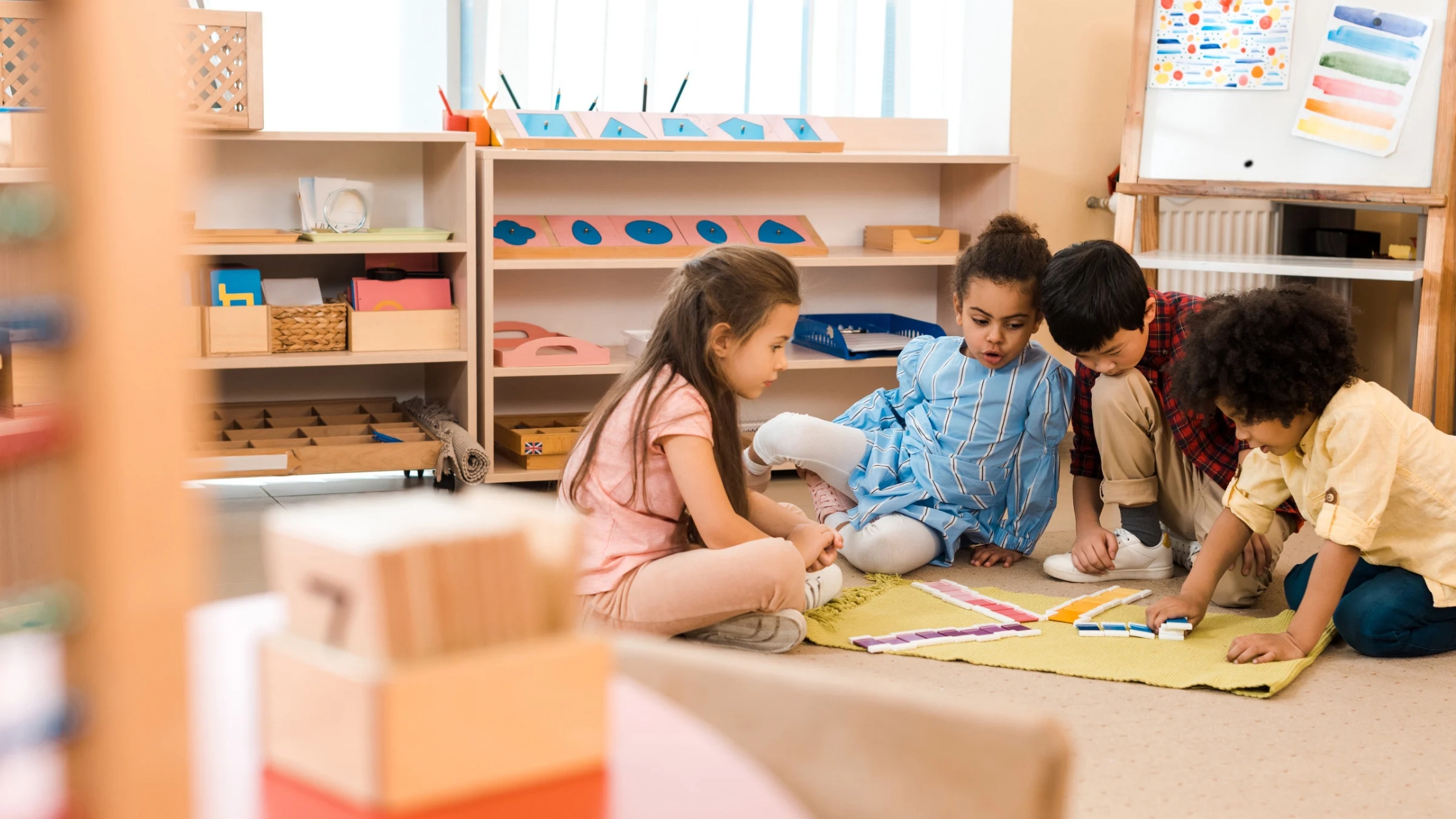
Children learn essential skills from adults, including safety, language, and trust. But the skills that allow children to function competently in the world such as emotional regulation, flexibility, resilience, and social problem-solving develop differently. They’re built through sustained time in peer community, where children have regular opportunities to practice relationships independently.
Research in child development and neuroscience has reinforced this reality for decades. Skills like attention, impulse control, and flexible thinking strengthen through real-time experience, not instruction alone. These capacities develop through repeated daily interactions with peers, especially in environments that include both harmony and friction. While experiences like co-ops, enrichment classes, and organized activities can be valuable, they’re structurally different from consistent peer community. These settings are often short-term, adult-directed, and emotionally buffered. Children build deeper social competence when they belong to predictable group environments where relationships unfold over time.
Peer conflict isn’t a breakdown in development. It’s part of how development occurs. Children build resilience by encountering discomfort and learning to repair rather than being protected from all tension. Children don’t become capable by avoiding challenge; they become capable by moving through it. When children spend extended time in environments where adults manage their social experiences, skills aren’t lost. They’re simply unpracticed. When a child later enters a regularly scheduled peer community, the visible gap doesn’t indicate harm. It indicates opportunity.
At Meridian Learning, we intentionally design environments that give children regular rhythm, real peer interaction, and meaningful chances to practice communication, collaboration, and repair because we believe strength comes from experience. Our micro lab schools offer children the opportunity to grow within a multi-age, life-like community that’s both real and protected. Children aren’t shielded from relationship, conflict, or challenge; they’re supported inside spaces that are sized for safety and true social learning.
Curious what this looks like in practice? Explore our lab schools here.