Montessori’s multi-age method has been used successfully for more than a century, and it remains one of the most powerful ways to guide students. So why are so many microschool founders still searching for solutions that already exist?
Too often, microschool leaders rely on online curriculum to meet the needs of multiple ages. While it can seem like a quick way to cover content, it often misses the deeper, hands-on, relationship-driven learning that children need. There’s a better way, one rooted in the science of child development. The Montessori method, refined over decades, was built for exactly this. It blends independence with guidance, structure with flexibility, and allows children to learn at their own pace while growing within a connected classroom community.
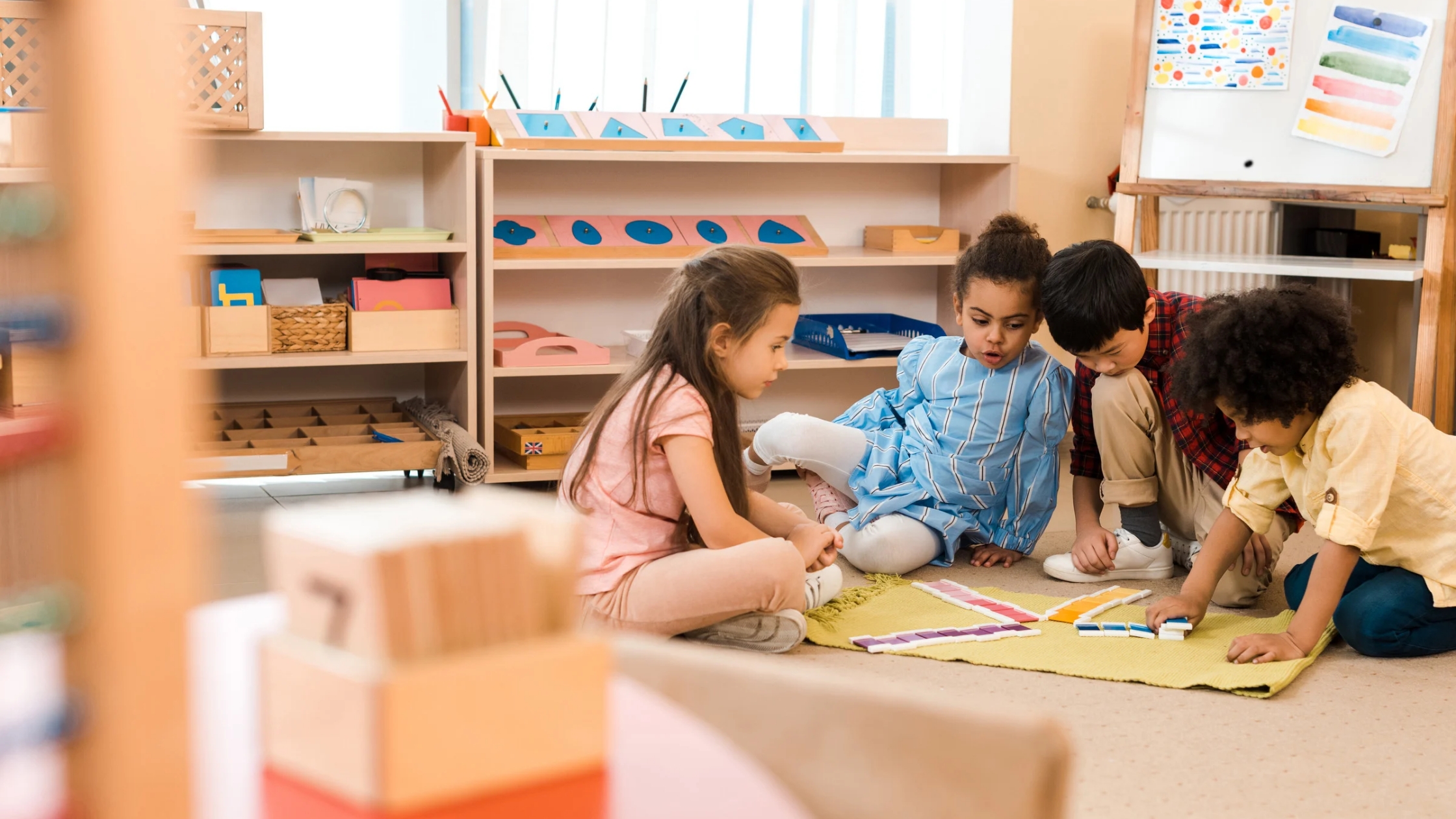
In a multi-age classroom, children learn not just from the teacher but from one another. Younger students absorb lessons through observation and participation, while older students deepen their understanding by mentoring peers. This dynamic creates a natural cycle of collaboration, leadership, and empathy — qualities that can’t be replicated through screens or standardized pacing.
While resources and demonstrations can be helpful, the heart of multi-age teaching is something that develops through experience. Guiding children of different ages together is less about a particular technique and more about a way of preparing the environment, observing learners, and responding with intention. It’s a practice that deepens over time and is strengthened through mentorship and thoughtful support. This is why the most effective multi-age classrooms grow from steady guidance rather than quick fixes or one-size-fits-all training.
Meridian’s microschool mentorship, in partnership with The Institute of Montessori Training (IMT), helps microschool leaders strengthen this approach through Montessori-based guidance and practical implementation support. Together, we focus on the skills that sustain authentic, human-centered classrooms: observation, preparation, and community.
When authentic Montessori practice meets intentional support, multi-age classrooms become more than possible, they thrive.