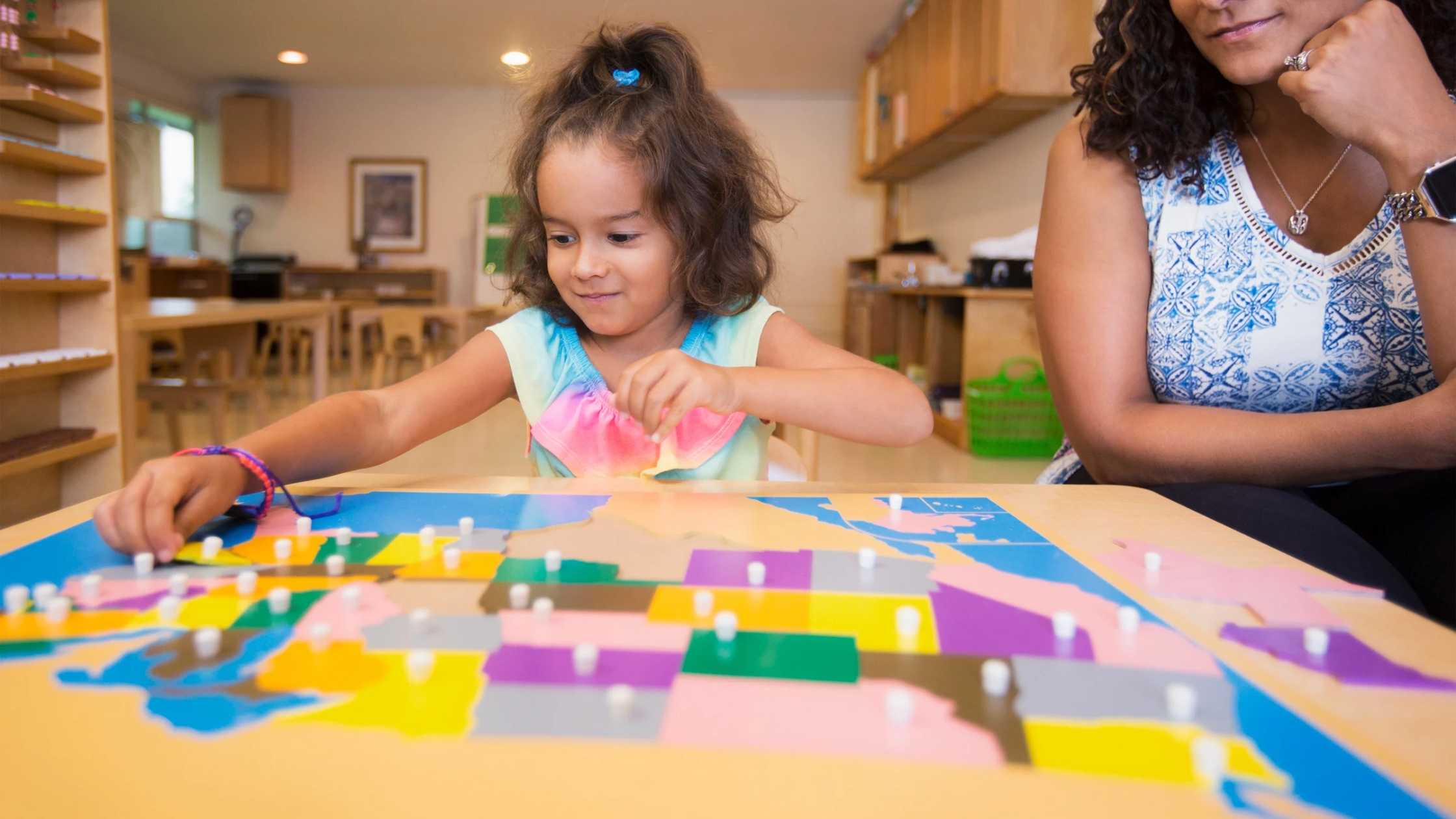
Montessori’s mastery-based approach has guided educators for more than a century—yet many microschool leaders have never been trained to assess student progress without grades, tests, or rigid pacing guides. In Montessori, this skill develops naturally through scientific observation—watching how children use materials, noting signs of mastery, and introducing new lessons only when they’re ready.
Those with Montessori training and practice learn to do this as part of their everyday work. Without that foundation, it’s easy to default to checklists or mass-produced assessments that miss the nuance of a child’s readiness. That’s when microschools risk drifting toward a smaller version of the traditional classroom.
Observation-based assessment invites both educators and parents to look beyond visible outcomes. It helps us notice patterns—how a child chooses work, how long they stay engaged, and how they return to challenges after a struggle. Over time, this kind of observation reveals growth that can’t be captured by numbers alone: confidence, focus, curiosity, and independence. These are the real signs of progress in a small, relationship-centered learning environment.
Meridian’s microschool mentorship, in partnership with The Institute of Montessori Training (IMT), gives leaders both the foundation and the tools to assess progress the Montessori way. With practical observation strategies, mastery-based recordkeeping, and coaching to apply them in a microschool setting, leaders gain the clarity and confidence to guide each child’s unique learning journey.
When assessment is rooted in observation and mastery, it’s no longer just a way to track progress—it becomes a powerful tool to shape each child’s path forward.